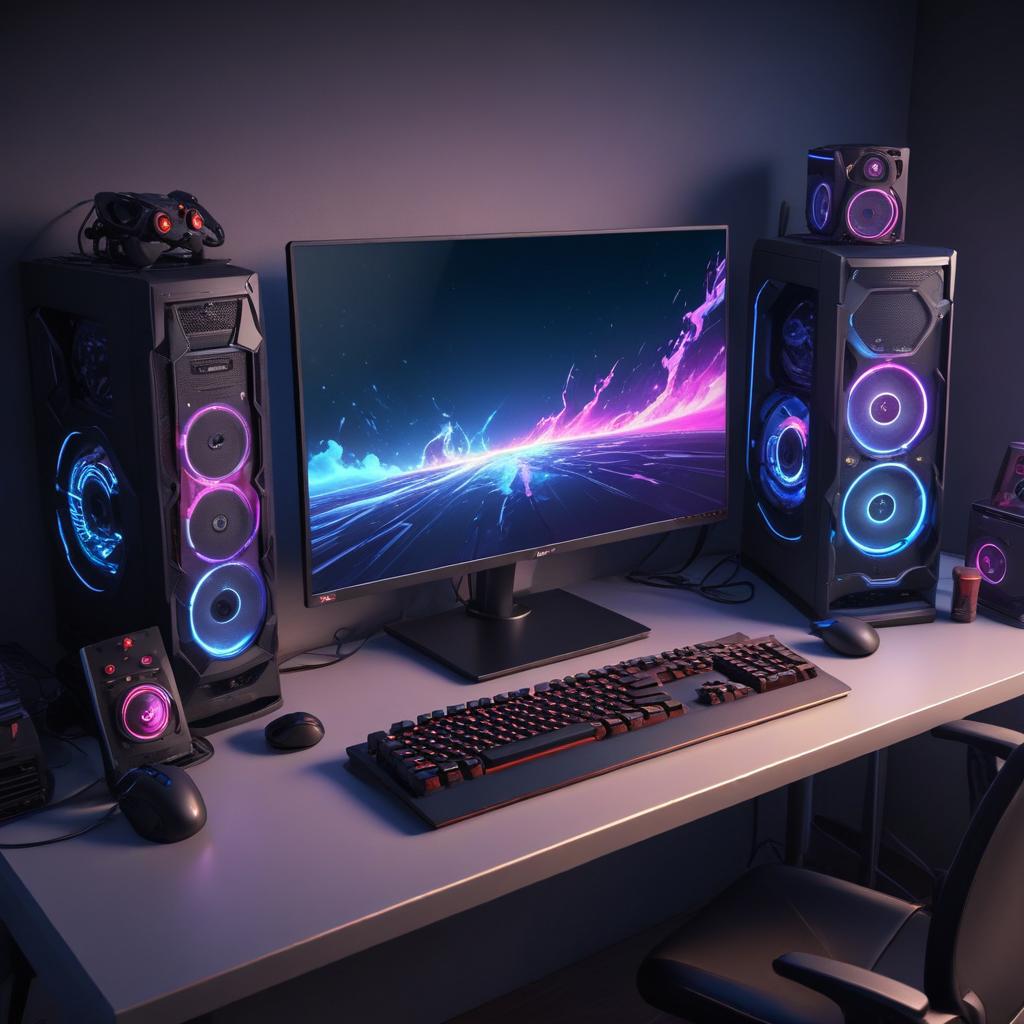
Overview of PC Gaming and Console Gaming
PC gaming and console gaming are two prominent gaming platforms that have shaped the gaming community in unique ways. Each platform offers distinct experiences, catering to different types of gamers worldwide. PC gaming, known for its versatility and high customization potential, allows players to build and upgrade their gaming rigs to enhance performance and graphics quality. This platform supports a vast library of games ranging from indie titles to AAA blockbuster releases, often with modding capabilities that extend gameplay possibilities.
On the other hand, console gaming offers a more streamlined and accessible experience. Consoles such as PlayStation, Xbox, and Nintendo are designed to provide plug-and-play convenience, with games optimized to run smoothly on fixed hardware specifications. This eliminates the need for technical knowledge related to hardware maintenance or upgrades, making console gaming especially popular among casual gamers and those seeking a hassle-free experience.
In terms of popularity, both PC gaming and console gaming have amassed massive communities, each with their own loyal fan base. PC gaming is favored by competitive gamers and enthusiasts who appreciate the precision of keyboard-and-mouse controls and the ability to customize settings to achieve peak performance. Meanwhile, console gaming thrives in the living room environment, offering exclusive titles and multiplayer experiences on a shared screen or online, which appeal to social gamers and families.
When considering a gaming overview, it is clear that PC gaming and console gaming each bring valuable attributes that enrich the landscape of digital entertainment. While PC gaming emphasizes power, flexibility, and game variety, console gaming focuses on convenience, exclusivity, and user-friendly design. Both platforms continue to advance technologically, maintaining their relevance and popularity in the ever-evolving gaming community.
History and Evolution
The history and evolution of gaming are fascinating journeys that reveal the rapid development of technology and user experience. PC gaming history dates back to the early 1970s when mainframe computers were used to play text-based games. The introduction of personal computers in the 1980s marked a pivotal milestone, allowing more complex graphics and gameplay. Key technological advancements like improved graphics cards, faster processors, and online multiplayer capabilities led to the expansion and sophistication of PC gaming.
On the other hand, console gaming history began in the early 1970s with the launch of dedicated consoles such as the Magnavox Odyssey. Significant milestones in console gaming include the release of the Atari 2600 in the late 1970s and the NES in the 1980s, which made gaming more accessible to households worldwide. Technological innovations, such as 3D graphics in the 1990s and online gaming in the 2000s, greatly contributed to the console gaming evolution.
Both PC and console gaming have undergone tremendous transformation, driven by continuous technological advancements and changing user demands. The convergence of high-definition graphics, immersive gameplay, and interactive online communities defines modern gaming history. Understanding this evolution highlights the unique strengths of both platforms while appreciating their integral roles in the gaming industry’s growth.
Key Differences Between PC and Console Gaming
When comparing gaming differences between PC vs console, several key factors stand out, particularly in hardware capabilities, game availability, and user experience. PCs generally offer more powerful hardware options, allowing for higher frame rates, better graphics, and more customization in gaming setups. This flexibility means gamers can upgrade components like graphics cards, processors, and memory, enhancing performance over time.
In terms of game compatibility, PCs boast a vast library of titles spanning various genres, including indie games and mods that often aren’t accessible on consoles. Console gaming platforms, on the other hand, tend to have exclusive titles that are optimized for specific hardware, delivering a more streamlined and consistent gaming experience. However, consoles sometimes lag behind PCs when it comes to releasing new games or supporting mods and custom content.
The user experience differs notably as well. Consoles offer plug-and-play ease, with games designed to operate smoothly on fixed hardware, making them accessible for casual gamers. PCs require more technical know-how to manage drivers, settings, and hardware compatibility but reward players with enhanced control and customization options. Overall, the gaming platforms comparison reveals that PC gaming appeals to those seeking performance and variety, while console gaming suits players looking for simplicity and exclusive content.
Performance and Gameplay Experience
When it comes to gaming performance, PCs have long been recognized for their superior hardware performance, which directly influences the overall gameplay experience. A high-end gaming PC can offer exceptional graphics quality, thanks to the ability to customize and upgrade components such as GPUs, CPUs, and RAM. This flexibility allows gamers to push the limits of resolutions, frame rates, and visual effects, providing a more immersive and visually stunning environment.
Consoles, on the other hand, are designed with a fixed hardware architecture that is optimized specifically for gaming. This ensures that games run smoothly and consistently, as developers tailor their games to the specific processing power and capabilities of the console. While consoles may not match the raw hardware performance of the top-tier gaming PCs, their efficiency and optimization deliver a seamless and enjoyable gameplay experience for the majority of users.
The difference in graphics quality between PC and console gaming can be significant, particularly when a PC is equipped with the latest graphics cards and high refresh rate monitors. Gamers can enjoy enhanced textures, better lighting effects, and higher resolutions on PCs. Consoles have made great strides in closing this gap with advances in their hardware and support for 4K resolution and HDR, but they often run games at lower frame rates compared to powerful PCs.
Another factor influencing gameplay experience is processing power. PCs can utilize cutting-edge processors that improve game physics, AI complexity, and multi-tasking capabilities, enhancing both single-player and multiplayer gameplay. Consoles are optimized to balance processing power and graphical output, delivering stable performance but with less raw computational ability than high-end PCs.
Overall, gaming performance on PCs tends to be superior due to customizable hardware that can be continuously upgraded, offering gamers the potential for top-tier graphics quality and processing power. However, consoles provide a reliable and optimized gameplay experience without the need for constant upgrades, making them an attractive choice for those seeking a hassle-free gaming setup. Both platforms deliver strong performance and gameplay quality, but the choice ultimately depends on the gamer’s priorities and preferences.
Hardware and Graphics Capabilities
When comparing hardware specs between PCs and consoles, the differences significantly influence graphics performance and gaming visuals. PCs boast customizable and often superior hardware, allowing gamers to upgrade components such as graphics cards, CPUs, and RAM. This flexibility results in enhanced graphics performance, delivering higher resolutions, faster frame rates, and support for advanced graphical effects. Consoles, on the other hand, are built with fixed hardware optimized for gaming, making them a reliable but less adaptable choice.
In terms of gaming visuals, PCs can outshine consoles due to their ability to push the limits of graphics performance. High-end PCs can run games with ultra settings, ray tracing, and mod support that elevate visual quality and immersion. Consoles focus on delivering consistent experiences with tailored hardware-software integration, offering excellent visuals but typically limited by their fixed hardware specs. This creates a notable distinction in PC vs console graphics where PCs often have the edge in sheer graphical fidelity.
Ultimately, the choice between PC and console graphics comes down to the importance of hardware customization versus convenience. PCs provide unmatched graphics performance potential through superior hardware specs, while consoles ensure stable visuals optimized for the platform. Both offer compelling gaming visuals, but PC gaming typically leads in raw graphics capabilities, making it the preferred choice for enthusiasts seeking top-tier hardware and impressive gaming visuals.
Input Methods and Controls
PC gaming and console gaming utilize different input methods that significantly influence player interaction and control precision. On PCs, gaming controls primarily involve the use of a keyboard and mouse. This combination offers a high level of accuracy and responsiveness, especially beneficial in genres like first-person shooters and strategy games, where precise aiming and quick actions are crucial. The keyboard provides numerous customizable keys, allowing players to map a variety of commands and macros, enhancing control and gameplay efficiency.
In contrast, console gaming relies on gamepads as the main input devices. Gamepads are designed for comfort and ease of use, fitting naturally into players’ hands and providing intuitive control with analog sticks and buttons. While gamepads generally offer less precision compared to a mouse, they excel in providing a tactile and immersive experience, making them preferred for racing games, platformers, and third-person action games. The input devices on consoles encourage a different style of gameplay, often focusing on fluid movement and accessibility.
Ultimately, the choice of input affects how players interact with games and how precise their control can be. PC gaming controls, with keyboard and mouse, cater to players seeking maximum accuracy and customization, while console gaming controls prioritize comfort, simplicity, and versatility with gamepads. Both input methods shape the gaming experience and play style in unique ways.
Cost, Accessibility, and Game Libraries
When comparing PC gaming to console gaming, the financial aspects often play a significant role in a gamer’s decision. Gaming cost on consoles typically includes the initial investment in the hardware, such as the console itself, which can range from budget-friendly to premium prices depending on the model. Additionally, consoles often require ongoing subscription services like PlayStation Plus or Xbox Game Pass for multiplayer access and exclusive discounts, adding to the overall expenditure. On the other hand, PC gaming usually requires a more substantial upfront investment if building or buying a high-performance rig, but it offers a wide range of pricing options depending on the components chosen.
One of the biggest advantages in favor of PC gaming is the affordability of game libraries. Digital marketplaces like Steam, Epic Games Store, and GOG frequently host massive sales, allowing gamers to purchase titles at steep discounts. Moreover, there is a vast collection of free-to-play and indie games, making PC an accessible platform for those on a tight budget. Console game libraries, while extensive, often have less frequent sales and may include higher prices for new releases. Still, subscription services on consoles can provide access to a rotating game library at a fixed monthly fee, which can be cost-effective for avid gamers.
Accessibility is another crucial factor to consider. Consoles are designed with user-friendliness in mind, offering a plug-and-play experience that requires minimal setup, making them highly accessible to a broader audience including casual gamers. They are also portable, allowing players to easily take their gaming experience to different locations. PCs, while capable of providing a more customizable gaming environment, require more technical knowledge for setup, maintenance, and upgrades. However, PCs offer unparalleled flexibility with peripherals, mods, and software enhancements that enhance gameplay.
Game libraries on both platforms cater to diverse tastes and preferences. Consoles often host exclusive titles from major franchises that are unavailable on PC, adding value to their ecosystem. Conversely, PCs boast a larger selection of genres, especially in niches like strategy games, simulations, and MMORPGs. The availability of backward compatibility is also worth noting; many PC games remain playable long after release, whereas console generations may phase out older titles. Ultimately, choosing between PC and console gaming comes down to balancing gaming cost, accessibility, and preference for specific game libraries.
Initial Setup and Upgrade Costs
When considering the setup cost, PC gaming typically requires a higher initial gaming investment compared to consoles. Building or buying a gaming PC can demand significant upfront expenses for components like the processor, graphics card, RAM, and peripherals. This investment generally results in superior performance and customizability. Conversely, console pricing is usually more budget-friendly at the start, as consoles come as all-in-one units with standardized hardware, easing the purchasing decision for gamers seeking simplicity.
However, the story doesn’t end at the initial purchase. Ongoing PC upgrade costs allow gamers to enhance their rigs incrementally, targeting specific components such as the GPU or storage to keep up with the latest gaming demands. While this can lead to better long-term performance, it also means that maintaining a cutting-edge PC can be an ongoing gaming investment. In contrast, consoles have limited upgrade options, often restricted to external storage expansions or peripheral additions, which tends to keep additional expenses lower over time.
Understanding these differences in setup cost and upgrade potential is essential for gamers budgeting their gaming experience. PCs offer greater flexibility but at potentially variable upgrade costs, while consoles provide a more predictable pricing curve with fewer opportunities for hardware enhancements. Deciding between these options depends largely on a player’s willingness to invest upfront and over time to achieve their preferred gaming experience.
Variety and Availability of Games
The game library available on PCs and consoles differs significantly, shaping the overall gaming experience on each platform. PCs boast a vast and diverse game selection due to their open ecosystem, supporting a wide range of genres and indie developers alongside major titles. This variety often includes numerous classic games and experimental releases unavailable on consoles. Conversely, consoles tend to have a curated game library tailored to ensure optimal performance and ease of use, which can sometimes limit the breadth of options but enhances consistency in gameplay experience.
Exclusive games serve as a major differentiator between the two platforms. Consoles typically have strong exclusive titles developed specifically for their hardware, designed to attract players to the specific system. These exclusives often become flagship games that define a console generation. On the other hand, PCs have fewer hardware exclusives but enjoy exclusive titles that leverage their advanced capabilities, such as enhanced graphics and modding support, further enriching their game library.
Cross-platform games have blurred the lines, allowing players on both PCs and consoles to enjoy multiplayer experiences together. Many popular titles are now released simultaneously across platforms, promoting a unified community and expanding player interaction. However, the game selection on PC often remains broader, including cross-platform games along with numerous niche and independent titles not always available on consoles.
In summary, the game library and variety available on PCs tend to be more extensive and diverse, with a greater focus on openness and range, while consoles offer exclusive games that provide unique, polished experiences. Both platforms support cross-platform titles, ensuring that players can enjoy shared gaming experiences regardless of their chosen hardware.

I’ve been playing video games since I got my first console at age five, and I love sharing insights about the industry. Writing about game design, indie gems, and the latest releases keeps me excited about the future of gaming.